The Talent Behind the Energy Transition – And Why the Race to Secure It Is Accelerating in 2026
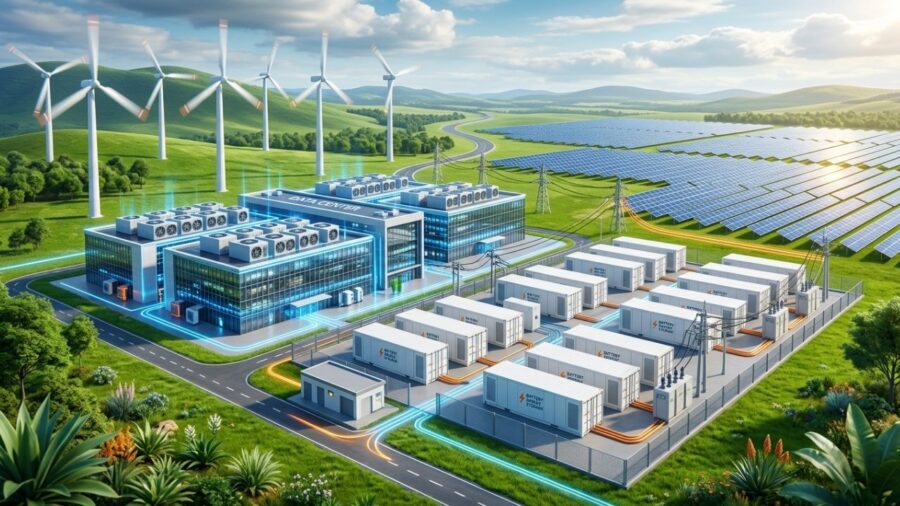
The energy transition won’t be won by technology alone. It will be won – or lost – by the people who design, build, operate, and scale it.
And right now, in 2026, the gap between the talent the industry needs and the talent it can actually find has never been wider.
The Numbers Tell a Stark Story
According to a joint study by Kearney and the IEEE Power and Energy Society, the power industry will need between 450,000 and 1.5 million additional engineers by 2030 – more than double today’s workforce. Up to 40% of global power executives already identify insufficient skills and competition for talent as their two biggest hiring challenges.
The IEA has been equally direct. Its World Energy Employment report warns that clean energy job opportunities “are not being filled quickly enough,” with skills shortages particularly acute in engineering, power systems, and specialist technical roles.
Meanwhile, on the AI infrastructure side of our industry, the data is just as stark. According to IEEE Spectrum, the number of companies competing for the same pool of specialised data centre engineers has nearly tripled in the past few years alone. An estimated 340,000 data centre positions could go unfilled by the end of 2026 without major intervention — roles spanning power systems engineering, high-voltage specialists, MEP engineers, liquid cooling technicians, and AI infrastructure specialists.
The Uptime Institute found that 51% of data centre operators struggled to find qualified candidates in 2024. That pressure hasn’t eased. It’s intensified.
Why This Matters for Companies Like Yours
The companies at the forefront of the energy transition – those building large-scale renewables, modular power systems for mission-critical environments, and AI-ready data centre infrastructure – are not competing against one another for talent. They are competing against everyone.
Hyperscalers. Defence contractors. Oil and gas firms retooling for clean energy. Tech giants are pouring hundreds of billions of dollars into infrastructure buildout. All are chasing the same pool of engineers, project managers, data centre specialists, and executive leaders.
And the specialist roles are the hardest to fill. As Actalent’s 2026 engineering workforce analysis notes, demand for engineering skills is projected to grow by 13% by 2031 – yet a third of new engineering roles go unfilled today because of retirements, increasing demand, and a persistent skills gap. This isn’t a headcount problem. It’s a specialisation problem.
The industry doesn’t lack engineers. It lacks the right engineers, with the right combination of technical depth, sector experience, and cross-disciplinary capability, in the right geographies, available at the right time.
What the Best Candidates Are Actually Looking For
Here’s what over a decade of placing engineering, infrastructure, and executive talent across CleanTech tells us: The best candidates in 2026 are not primarily motivated by title or base salary. They want to work on problems that matter. They want a mission they can articulate – not just a job description. They want exposure to the kind of technical challenges that will define their career for the next decade.
Companies that communicate this clearly – that frame their engineering culture, their global ambition, and their role in the energy transition as part of the offer – consistently outperform those that lead with compensation packages alone.
The IEA noted it plainly in their research: communicating the mission – “we’re solving a massive problem for the planet, and we need your help” is critical to attracting the next generation of talent. That applies at every level. From graduate engineers to C-suite executives.

Where Specialist Recruitment Partners Change the Outcome
Here is the reality most hiring managers in CleanTech and AI infrastructure already know, but don’t always act on quickly enough:
A generalist recruiter cannot shortlist a power systems engineer with modular UPS experience for a mission-critical data centre build. A generalist recruiter cannot identify a data centre infrastructure director who has navigated hyperscale builds across multiple jurisdictions. And a generalist recruiter certainly cannot discreetly approach a passive C-suite candidate at a competitor and have a credible conversation about a career-defining role.
As Empiric’s 2026 data centre market analysis found, hiring managers are increasingly moving toward specialist recruitment partners who understand mission-critical environments – partners who can connect clients with professionals who understand redundancy design, power systems, cooling performance, and compliance expectations.
That shift is not a trend. It is a necessity.
In a market where MEP engineer vacancies take an average of 4.2 months to fill and cause real project delays, speed and precision are strategic advantages. The difference between closing a transformational hire in six weeks versus six months is not luck. It’s the quality of the network, the depth of the sector knowledge, and the trust a specialist recruiter has built with the candidates you need – long before you knew you needed them.
Our CleanTech division works across the full talent spectrum: from data centre infrastructure engineers and power systems specialists to renewable energy project directors and C-suite executives. We work exclusively in the sectors where the energy transition is happening – which means the candidates we know, trust, and keep warm are exactly the profiles your competitors are trying to find.
The Opportunity Is Now
The global market for clean energy technologies is projected to exceed $600 billion annually by 2030. Data centres are projected to require $6.7 trillion in investment worldwide to keep pace with AI-driven compute demand, according to McKinsey. The race is on.
The organisations that move with intent – that treat talent strategy as a core business function and build the right partnerships to execute it – will be the ones who deliver on the ambition.
The ones that wait will find the talent has already moved.
- If you’re scaling a CleanTech or AI infrastructure team in 2026 Let us know your requirements here so we can find you top candidates quickly.
- If you’re a senior engineer, infrastructure specialist, or executive exploring what’s possible, apply for our open roles. We’d welcome a conversation.